The promise of agentic AI – systems capable of independent action, complex problem-solving, and continuous learning – is rapidly shifting from theoretical discussion to practical enterprise imperative. For Canadian leaders looking towards 2026, the question is no longer if agentic AI will transform operations, but how to implement it strategically, responsibly, and at scale. This isn't about simply deploying more AI; it's about embedding autonomous decision-making and action into core business processes, demanding a meticulous approach to planning, governance, and human integration.
What is Agentic AI?
Agentic AI systems are distinct from traditional AI models. They possess a degree of autonomy, a defined objective, and the ability to execute multi-step tasks to achieve that objective, often interacting with various systems and data sources along the way. Think beyond predictive analytics to systems that can not only identify a market trend but also initiate a series of actions – from adjusting inventory levels to drafting marketing copy – to capitalize on it, all while learning from outcomes.
Building Strategic Agentic AI Roadmaps for 2026
The journey to effective agentic AI begins with a clear, strategic roadmap. This isn't a purely technical exercise; it's a strategic business imperative.
- Identify High-Value Use Cases: Begin by identifying areas where agentic AI can deliver significant, measurable impact. Focus on repetitive, data-rich processes that require dynamic adaptation. For a Canadian financial institution, this might be autonomous fraud detection and resolution or personalized client service orchestration. For a public sector entity, it could be optimizing resource allocation for public services or streamlining complex regulatory compliance.
- Assess Current Capabilities and Gaps: Evaluate your existing data infrastructure, AI talent, and organizational readiness. Do you have the clean, governed data necessary for agents to operate effectively? Are your teams equipped with the skills to design, monitor, and manage agentic systems?
- Phased Implementation with Clear Milestones: Adopt a crawl-walk-run approach. Start with pilot projects in contained environments, demonstrate value, gather learnings, and then scale. Each phase should have defined success metrics and a clear path to the next.
- Integrate with Enterprise Architecture: Agentic systems don't operate in a vacuum. Ensure your roadmap includes integration with existing enterprise systems, data lakes, and security frameworks.
Establishing Robust Guardrails and Responsible Deployment
The autonomy of agentic AI necessitates robust guardrails. Unchecked, these systems can introduce risks ranging from operational errors and ethical dilemmas to compliance breaches.
- Data Governance as Foundation: Agentic AI is only as good – and as safe – as the data it consumes and acts upon. Implement stringent data governance policies, ensuring data quality, privacy (critical under Canadian regulations like PIPEDA), and ethical sourcing. Agents must operate within clearly defined data boundaries.
- Ethical AI Principles: Embed ethical considerations from design to deployment. This includes principles of fairness, transparency, accountability, and explainability. Can you understand why an an agent made a particular decision? Can you audit its actions?
- Regulatory Compliance Frameworks: Stay abreast of evolving AI regulations in Canada and internationally. Design your agentic systems to be auditable and compliant, ensuring mechanisms for oversight and intervention are built-in from the start.
- Automated Monitoring and Alerting: Deploy continuous monitoring systems that track agent performance, identify deviations from expected behaviour, and trigger alerts for human review or intervention.
Human-in-the-Loop (HITL) Delivery: The Non-Negotiable Imperative
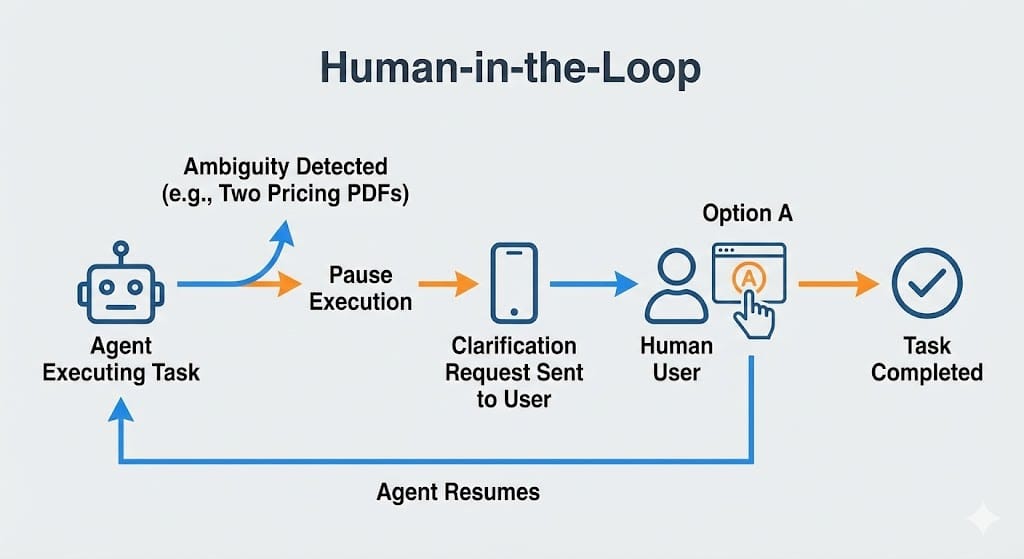
Despite the allure of full autonomy, human-in-the-loop (HITL) delivery is not just a best practice; it's a critical component for trusted and effective agentic AI. HITL ensures that human intelligence, intuition, and ethical judgment remain central to the AI's operation.
- Supervisory Oversight: Humans act as supervisors, monitoring agent performance, validating critical decisions, and providing feedback for continuous improvement. This is particularly vital in high-stakes environments where errors carry significant consequences.
- Intervention and Correction: Mechanisms must be in place for humans to intervene, pause, or override agent actions when necessary. This could be due to unexpected scenarios, ethical concerns, or performance degradation.
- Learning and Adaptation: HITL provides a feedback loop. Human corrections and approvals become new training data, allowing agents to learn from mistakes and adapt to nuances that purely automated systems might miss. This accelerates the agent's journey towards greater reliability and effectiveness.
- Trust and Adoption: Users are more likely to trust and adopt agentic systems when they know there's a human safety net. This builds confidence and facilitates organizational change management.
For Canadian enterprises, where trust and responsible innovation are highly valued, a strong HITL strategy is a differentiator.
Scaling to Production Agent Systems: From Pilot to Enterprise Reality
Moving from successful pilots to full production requires a robust operational strategy.
- Scalable Infrastructure: Design your infrastructure to support the computational demands and data throughput of multiple, interacting agent systems. This includes cloud-native architectures, robust APIs, and secure data pipelines.
- Performance Monitoring and Optimization: Continuously track agent performance against business KPIs. Implement A/B testing for agent strategies and use techniques like reinforcement learning to optimize their effectiveness in real-time.
- Security and Resilience: Production agent systems are potential targets. Implement advanced security measures, including access controls, encryption, and threat detection. Design for resilience, with failover mechanisms and disaster recovery plans.
- Version Control and Rollback: Just like software, agent systems evolve. Implement robust version control for agent logic and models, enabling quick rollbacks if issues arise.
- Organizational Change Management: Prepare your workforce. Agentic AI will change roles and processes. Invest in training, communication, and new organizational structures to support this transformation.
Actionable Takeaways for Enterprise Leaders
To successfully integrate agentic AI into your enterprise by 2026, consider these immediate steps:
- Prioritize a "Guardrails-First" Mindset: Before even selecting your first agentic AI pilot, define your enterprise-wide ethical AI principles, data governance policies, and regulatory compliance frameworks. These guardrails are non-negotiable foundations for trusted deployment.
- Design for Human-in-the-Loop from Day One: Resist the urge for full autonomy initially. Architect your agentic systems with explicit human oversight, intervention points, and feedback loops built into every stage of development and deployment. This cultivates trust and ensures continuous learning.
- Develop a Phased, Value-Driven Roadmap: Avoid a "big bang" approach. Identify 2-3 high-impact, low-risk use cases where agentic AI can deliver clear, measurable business value. Use these pilots to refine your processes, technology stack, and human-AI collaboration models before scaling.
How Optimal Works Can Help
At Optimal Works, we understand the complexities of bringing agentic AI into the enterprise. Our advisory services help Canadian organizations navigate the entire lifecycle – from crafting strategic agentic AI roadmaps aligned with your business objectives, to designing robust data governance and ethical AI guardrails, and establishing pragmatic human-in-the-loop delivery frameworks. We assist in building scalable production agent systems that deliver tangible value while ensuring compliance and fostering trust. Our expertise in program management, data governance, and regulatory strategy provides a holistic approach to transformational AI initiatives.
Conclusion
The era of agentic AI is here, offering unprecedented opportunities for efficiency, innovation, and competitive advantage. For Canadian enterprises, success hinges not on simply adopting the technology, but on a deliberate, strategic approach that prioritizes responsible innovation, robust governance, and the indispensable role of human intelligence. By building thoughtful roadmaps, implementing stringent guardrails, and embracing human-in-the-loop delivery, leaders can confidently steer their organizations towards a future where intelligent agents augment, rather than complicate, their strategic ambitions.
Discuss this with your team
Optimal Consulting helps enterprises deliver on Agentic AI—from strategy through execution.
Book a consultation